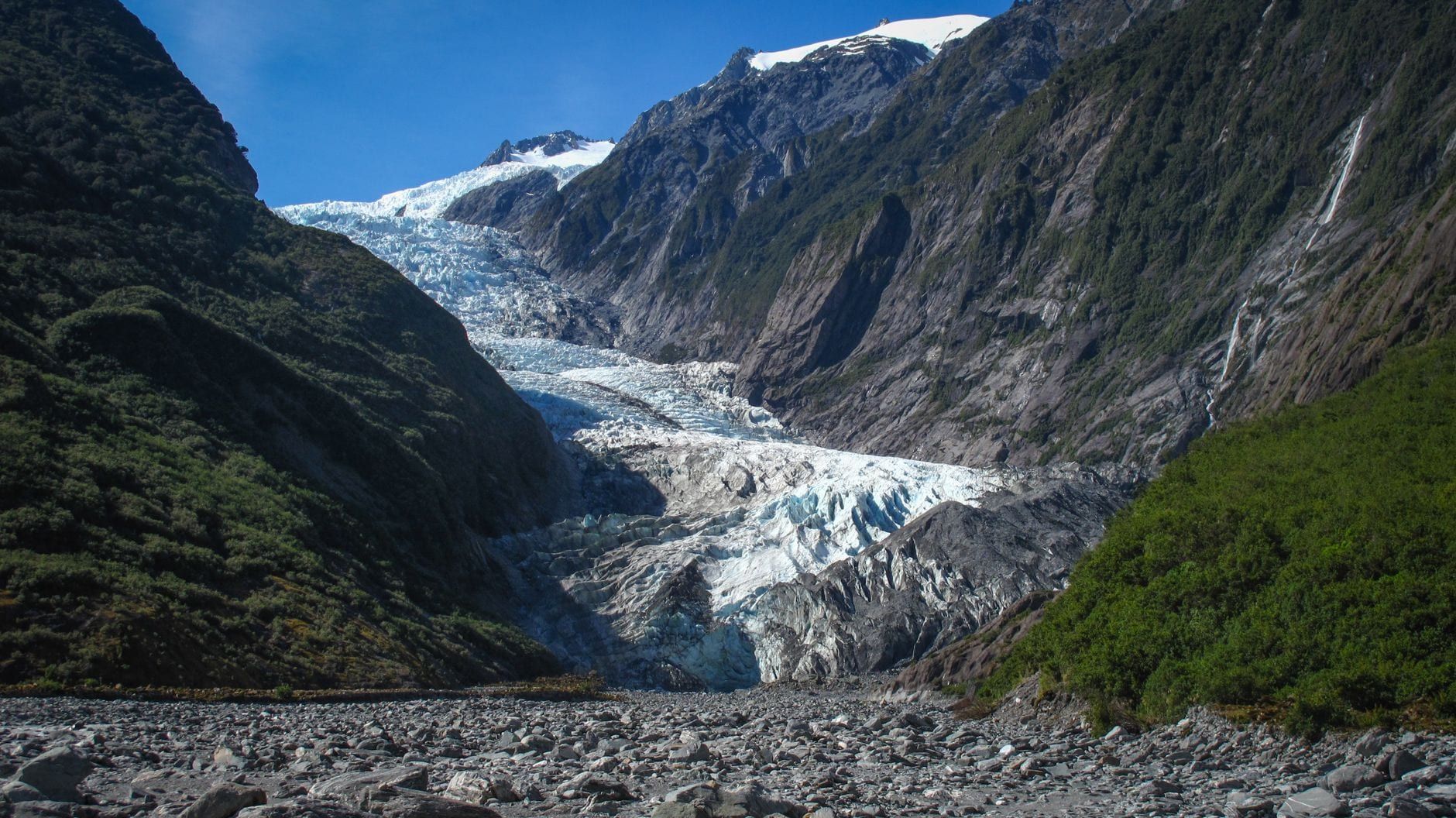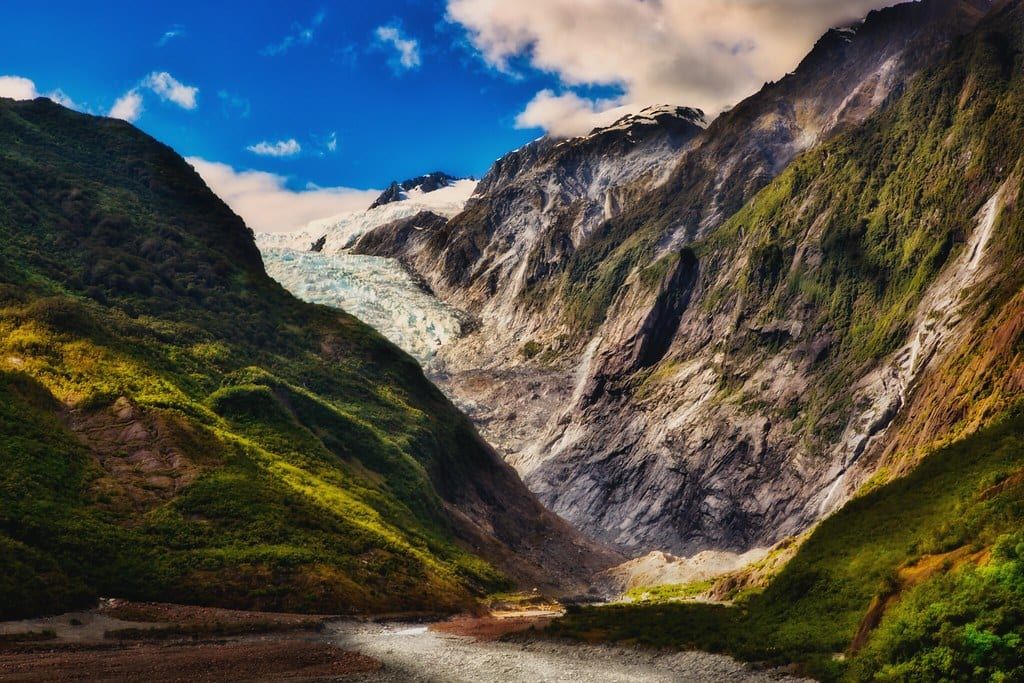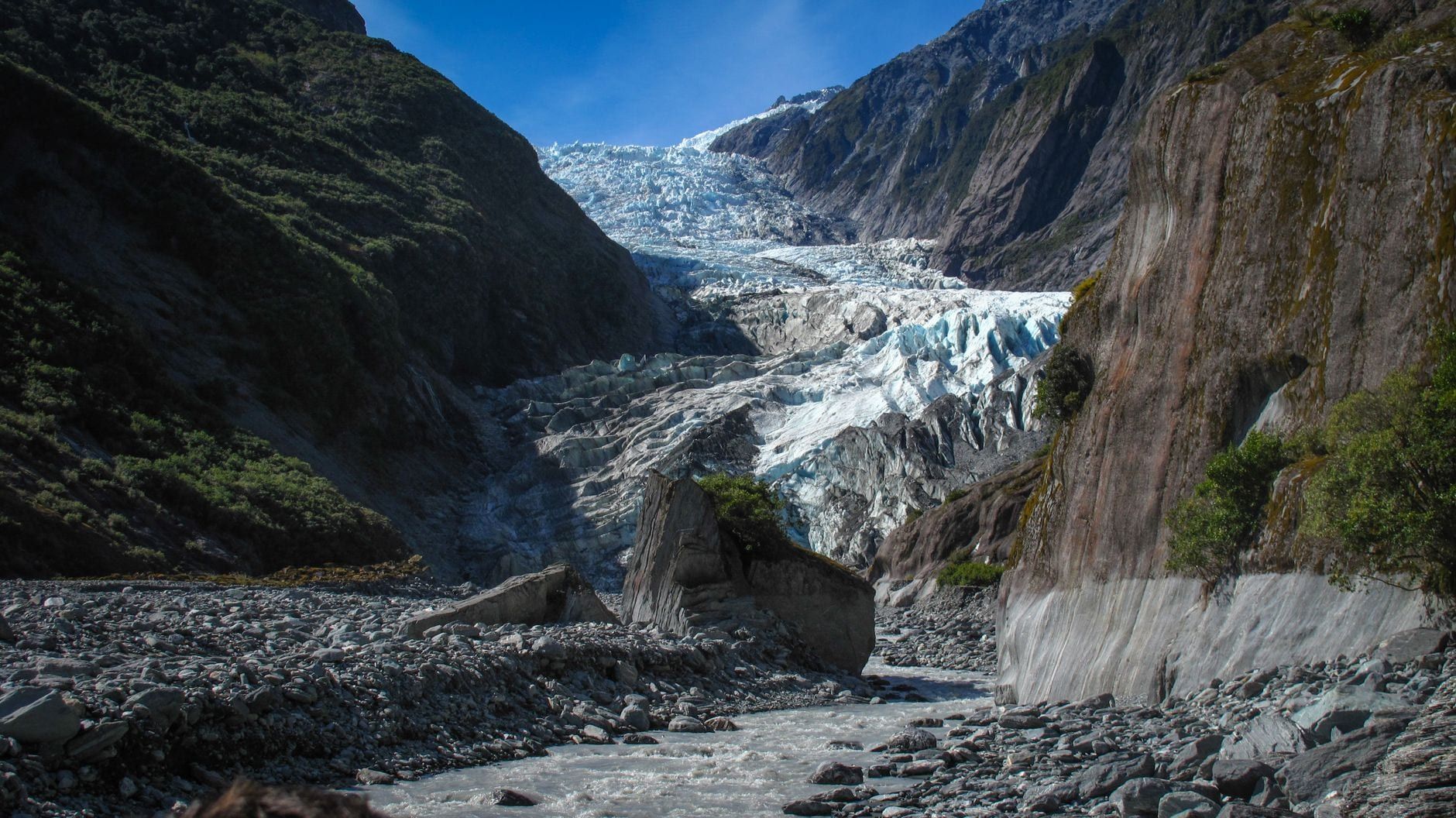
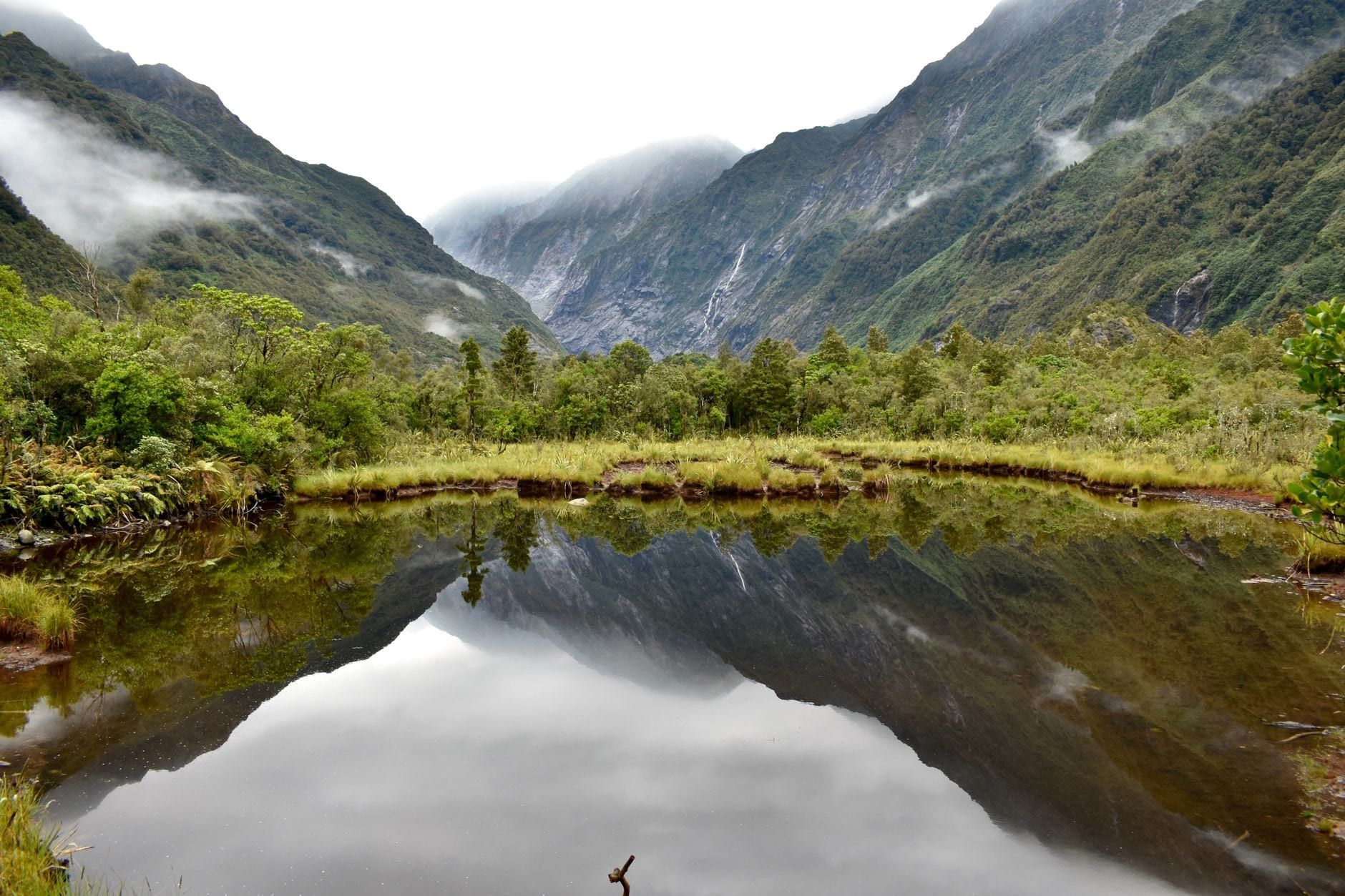
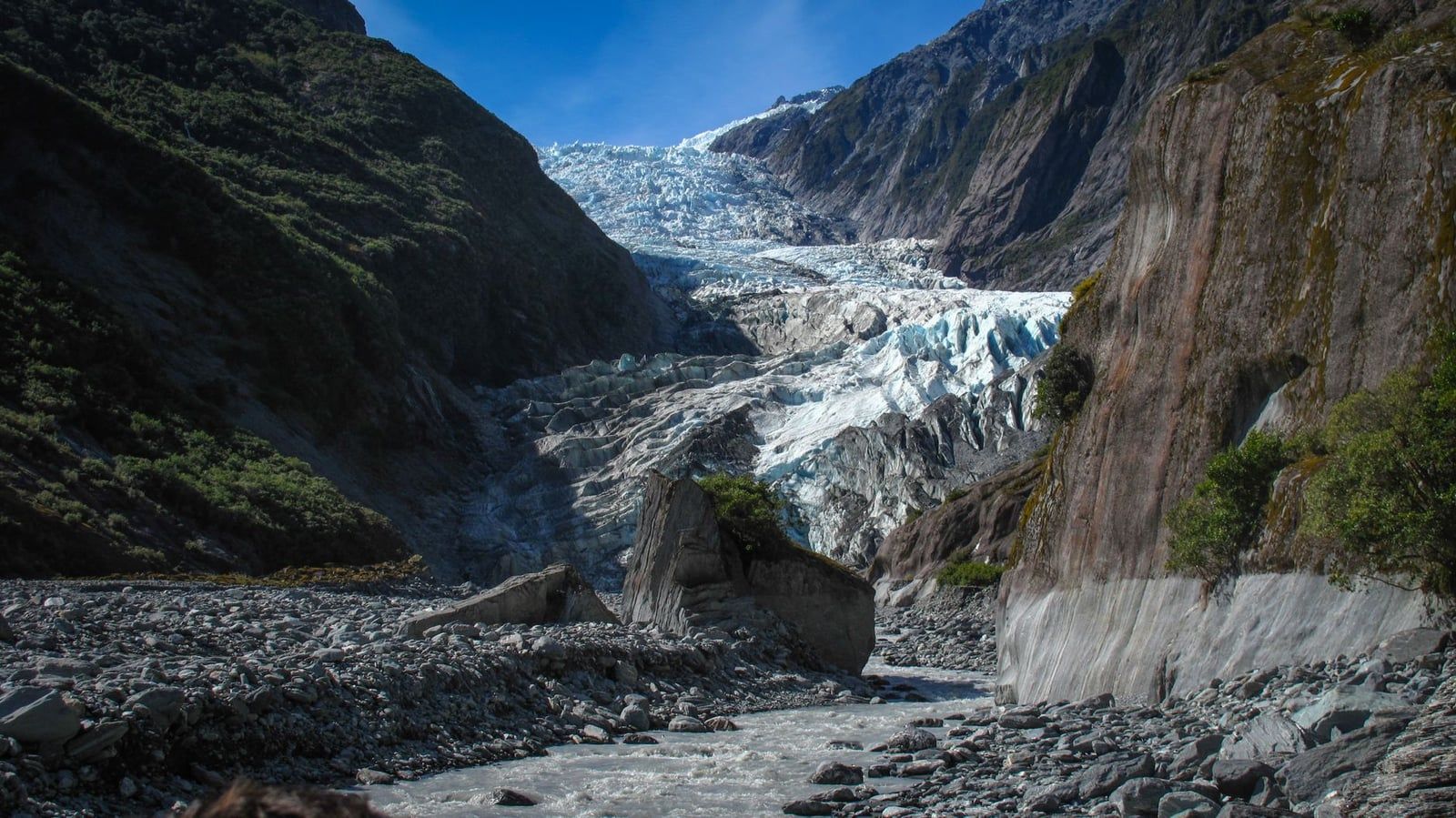
Franz Josef Glacier drops 12 kilometres off the Southern Alps into West Coast rainforest, inside Westland Tai Poutini National Park. It's one of only three glaciers on Earth that flow down into temperate bush. No track reaches its ice anymore: the Waiho River rearranged the valley floor, and the free viewpoint now looks at a distant white face. The heli hike is the only way onto the glacier itself.
It's also the priciest half-day in the village. Franz Josef Glacier Guides, the only operator with landing rights on the ice, charges NZ$899 per person, and West Coast weather grounds an estimated 40–50% of winter departures. Here's everything you need before committing: what the day involves, whether you'll clear the restrictions, and how to book so the weather doesn't win.
What Is the Franz Josef Glacier Heli Hike?
A helicopter flight and a guided glacier walk in a single booking. The flight carries you up the valley to a landing high on the main icefall, terrain no walking track can reach, and a guide then leads you across the ice for up to two and a half hours before the return flight. Franz Josef Glacier Guides runs the trip, with the helicopters flown by Inflite.
| Detail | The basics |
|---|---|
| Price | NZ$899 per person; adults and children pay the same |
| Total duration | Up to 4 hours, check-in to finish |
| Time on the ice | Up to 2.5 hours (about 2 hours walking) |
| Group size | One guide per 11 guests |
| Difficulty | Moderate; no glacier or crampon experience needed |
| Minimum age | 10 years (plus 137 cm height and 35–115 kg) |
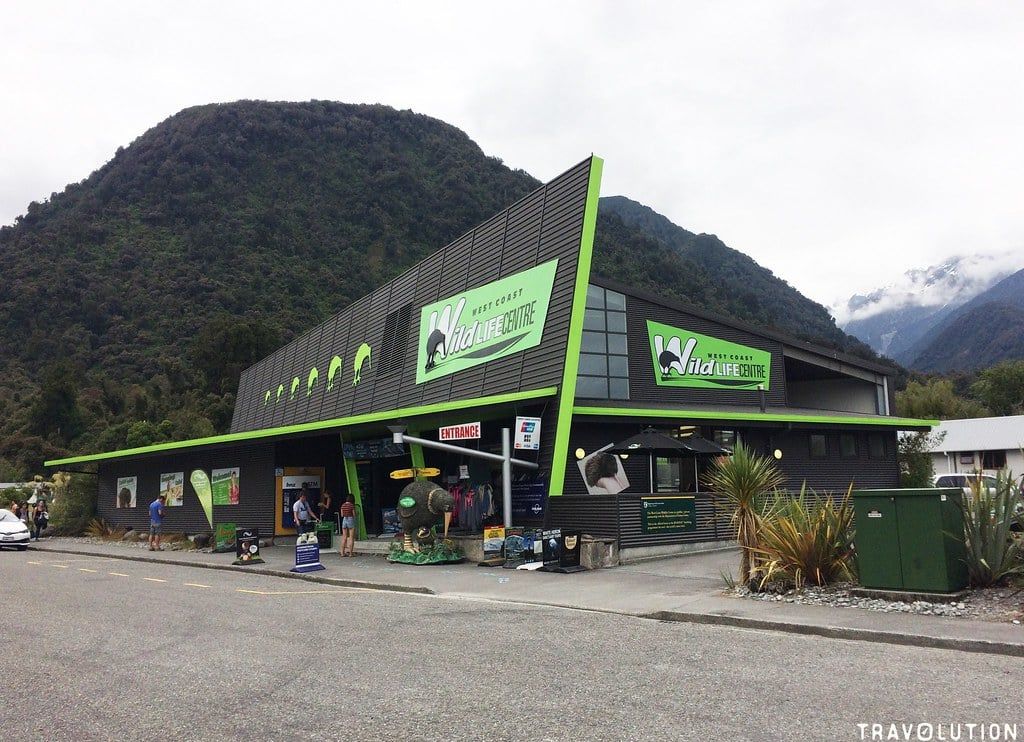
Summer departures leave at 7:30am, 10:00am and 12:30pm, and check-in is 15 minutes before your slot at Glacier Base, 63 Cron Street — that's 7:15am for the first flight. Trips need a minimum of four guests to run, which is worth confirming with the office 48 hours ahead.
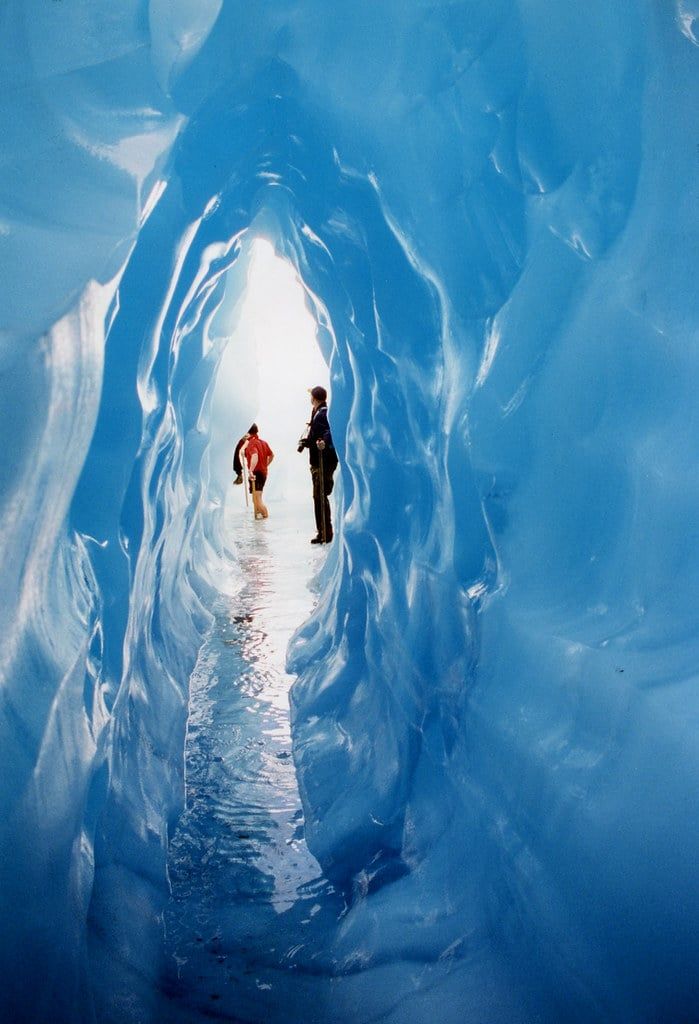
Expect nothing fixed on the ice. Franz Josef, Kā Roimata o Hine Hukatere in Māori tradition, is the fastest-moving commercially guided glacier in the world, so the crevasses, ice towers and caves your guide heads for shift from week to week, and the route gets decided that morning. Two groups on consecutive days can have genuinely different trips, and the operator guarantees no specific feature.
Is the Franz Josef Heli Hike Worth It? An Honest Verdict
Book it if the glacier is the headline of your South Island trip, the price won't pinch, and your itinerary keeps a spare morning for a weather re-run. Skip it if NZ$899 would strain the budget, your schedule allows exactly one tightly timed attempt, or you've already heli-hiked in Alaska or Iceland. Same tour, different verdicts.
The case for: two scenic helicopter flights, a few hours standing on ice up to 300 metres thick, guiding from people who read glaciers for a living, and every technical item handed over at check-in. The fitness bar is low — comfortable walking for two hours covers it. For plenty of travellers it ends up the best-spent NZ$899 of the trip.
The case against starts with the price. Then comes the weather, which grounds enough departures that you should plan around it rather than hope. The pace can also feel stop-start: guides carve steps into the ice as the group moves, so you'll wait, climb, and wait again. Anyone chasing a workout will find it gentle; photographers won't mind the pauses.
One comparison that isn't close: the paid trip versus the free viewpoint. The glacier has retreated roughly 3 km over the past century and the Waiho River has since cut the valley track, so the free walk now ends a long way from the ice. Without a helicopter, Franz Josef is a distant view. Our primer on the glacier's retreat and history explains how it got here.
What Happens on the Day, Step by Step
The whole trip runs up to four hours from check-in to finish. Here's the order of play.
Check-in, gear and the fitness test
Everything starts at Glacier Base, 63 Cron Street, 15 minutes before departure. Staff fit you with boots, crampons, waterproofs, helmet and harness, and the group gets a safety briefing. Then comes the fitness assessment: step up, move through a narrow space, climb down without support. It takes a minute. Travellers who can't complete it get turned away on the day, so the moderate rating deserves respect.
The flight up
A short walk to the helipad, then roughly 10–15 minutes in the air. The rainforest drops away, the valley walls close in, and the helicopter settles onto the ice high on the main icefall, the steep, broken section nobody could reach on foot from below. You fly the same route back at the end, so you're getting two scenic flights out of the booking.
On the ice
Crampons on, the group sets off for up to two and a half hours on the glacier, usually about two hours of walking broken up with stops. The guide cuts steps into the route as it develops, and some stand more than 400 mm high, which is real leg work. What you walk through depends on the week: narrow crevasses, blue ice caves, serac towers, meltwater-carved passages. The blue comes from density — old ice absorbs red light and sends blue back.
Keep expectations honest about features. The glacier moves fast enough that a cave found on Tuesday can be collapsing by Friday, and nothing specific is guaranteed. Ask at check-in what's forming that week; the guides track it daily.
Difficulty, Fitness and Restrictions: Can You Do It?
If you can walk comfortably for two hours, you can most likely do this trip. The rating is moderate, and no glacier or crampon experience is expected — nobody on a standard departure has any. The terrain still deserves honesty: uneven ice, steady inclines, narrow sections, and steps cut fresh each morning.
The limits are published and enforced. Minimum age 10. Minimum height 137 cm. Weight between 35 and 115 kg, with a weigh-in at check-in that counts your gear toward the top end. Participation also stops at 12 weeks of pregnancy.
Disclose your medical history when booking: ankle or knee injuries, ACL damage, joint replacements or dislocations, neck or back injuries, heart conditions, high or low blood pressure, diabetes, severe asthma. It's a long list, but it exists so guides can plan around you; a lead guide can still restrict anyone from sections of the ice based on that day's conditions.
Weather Cancellations and How to Beat Them
The weather decides whether this trip happens. Franz Josef collects roughly 200 rain days a year, and the operator needs a four-hour window of clear conditions before a departure can fly, with the final call usually made just before departure time. Weather cancellations are refunded in full. The risk is to your itinerary, never your wallet.
Numbers no booking page puts up front: on any given winter day (June–August) there's an estimated 40–50% chance the helicopters stay grounded, easing to 20–30% in summer. Winter pays you back with steadier ice features, since less meltwater slows the glacier's movement, plus far thinner crowds. If your trip allows only one attempt, aim for the November–February peak.
How to stack the odds when you book:
- Take the earliest slot: mornings are cleanest and cancellations leave later flights open.
- In winter, book weeks ahead; in summer, book months ahead.
- Stay two or three nights, keeping a spare morning after your booked slot.
- Phone the office on the morning of your trip; don't wait for an email.
- Confirm the four-guest minimum 48 hours ahead.
- Never book it immediately before a long onward drive.
Stay in the village itself. The operator recommends at least two days in the region for exactly this reason, and from most beds in Franz Josef the heli base, the cafés and the hot pools are a short walk away. Our where to stay in Franz Josef guide covers the options, and if the weather wins completely, the things to do in Franz Josef list will rescue the day.
What to Wear (and What the Operator Provides)
You need less kit than you think. The operator provides every technical item: crampons, harness, helmet, waterproof jacket and over-trousers, weatherproof boots with socks, trekking poles, a warm hat and gloves, and a small waist pack. Turn up in ordinary travel clothes and you'll walk out equipped for a glacier.
Your half of the list is short.
- Merino or polypropylene base layers for breathable warmth.
- Long pants; jeans aren't suitable.
- Sunglasses and sunblock, both essential; the desk sells sunglasses if you forget.
- A camera or phone.
- A small water bottle and snack if you want them.
Leave the rest at your accommodation: valuables including passport, wallet and car keys; portable chargers, spare camera batteries and camera bags; selfie sticks and anything extendable; vapes, cigarettes and lighters. Drones are doubly out, banned from the helicopter and, without a DOC permit, illegal anywhere in Westland Tai Poutini National Park.
The counterintuitive part is warmth. Hiking up carved steps in the sun heats you quickly, and a guide at one check-in advised swapping a down jacket for a fleece; the reviewer who took the advice was glad of it. Layers you can shed beat one bulky coat.
Franz Josef vs Fox Glacier Heli Hike: Which Should You Book?
The two glaciers sit 20 km apart on the same coast road, and most road-trippers pass both. Book one heli hike, not both; the on-ice experience overlaps far more than it differs. Weather, price and where you sleep should make the call.
| Franz Josef | Fox Glacier | |
|---|---|---|
| Price (per person) | NZ$899 direct | From about NZ$750 |
| Time on the ice | Up to 2.5 hours | About 3 hours |
| Minimum age | 10 years | 9 years |
| Flying weather | Estimated 40–50% of winter days cancelled | Sits lower; often flies when Franz Josef can't |
| The village | Bigger, more restaurants, walkable heli base | Small and quiet; Lake Matheson close by |
That weather row decides more than any other. Fox sits lower than Franz Josef, and its flying conditions often hold when Franz Josef is clagged in; travellers with cancelled Franz Josef bookings have joined Fox trips the same day. If your itinerary has zero slack, that's a real argument for Fox, and the roughly NZ$150 saving plus an extra half hour of ice strengthens it.
Franz Josef answers with convenience. The village is bigger, with more beds and restaurants in walking distance of the heli base, while Fox stays small and quiet, with Lake Matheson's mirror reflections a short drive down the road. If you're still torn, our Franz Josef or Fox Glacier comparison goes deeper on both.
One more variant worth knowing: fly-in packages from Queenstown. They run roughly six hours door to door and cost dramatically more than booking the identical trip in the village, which suits tightly packed itineraries and nobody else. Self-driving takes about five hours each way on SH6, so most people base themselves in Franz Josef and stay the night.
Cheaper Ways to Experience Franz Josef Glacier
If NZ$899 is out of reach — or your knees or your kids rule out the full hike — the same helicopters fly cheaper trips over the same ice. What falls away as the price drops is time on the glacier, and eventually the walking.
Glacier Heli Encounter: the short landing
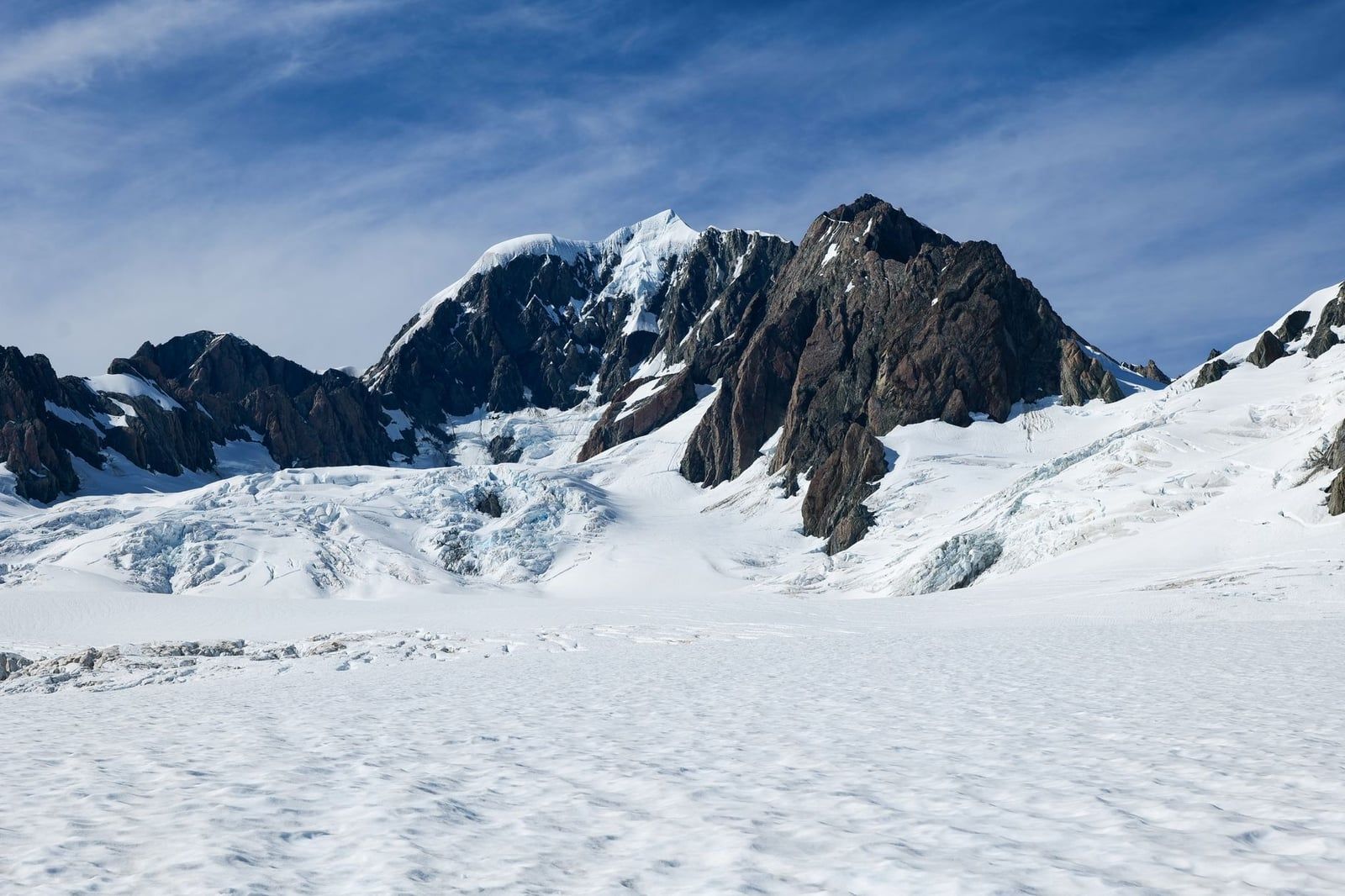
The same operator runs it, from around NZ$529–557. The helicopter lands in one spot on the glacier for 15–20 minutes: a look at the ice, some photos, then back aboard. No hiking, no fitness test, minimum age 4. Travelling with under-tens, or with anyone whose joints won't take two hours on crampons, this is the right booking.
Scenic flight with a snow landing
Roughly NZ$300–400 buys a flight over the glacier country and a 10–15 minute landing on the snow, with no walking at all. You'll see more of the Southern Alps from the air than the hikers ever do on the ice. Our helicopter tours from Franz Josef roundup lines up the options.
The free options: valley walk and Roberts Point
The Franz Josef Glacier valley walk costs nothing and takes about 30 minutes each way on a 1.7 km rainforest track. Manage expectations, though: the Waiho River has cut the valley floor and the glacier sits far up-valley, so the viewpoint gives you a distant white face across the valley. Sentinel Rock and the Glacier View tracks offer similar 20-minute lookouts.
Parking at the glacier car park runs $2.50 per half hour or $20 a day, card only. Our parking, hours and fees guide has the details, and the DOC visitor centre or Glacier Country's daily update will flag any closures after flooding or rockfall.
Want the closest view on foot? The Roberts Point Track is a rugged five-hour return hike, rated 3/5 for difficulty, ending at a platform directly opposite the glacier's face. That's as near as the ice gets without a helicopter.
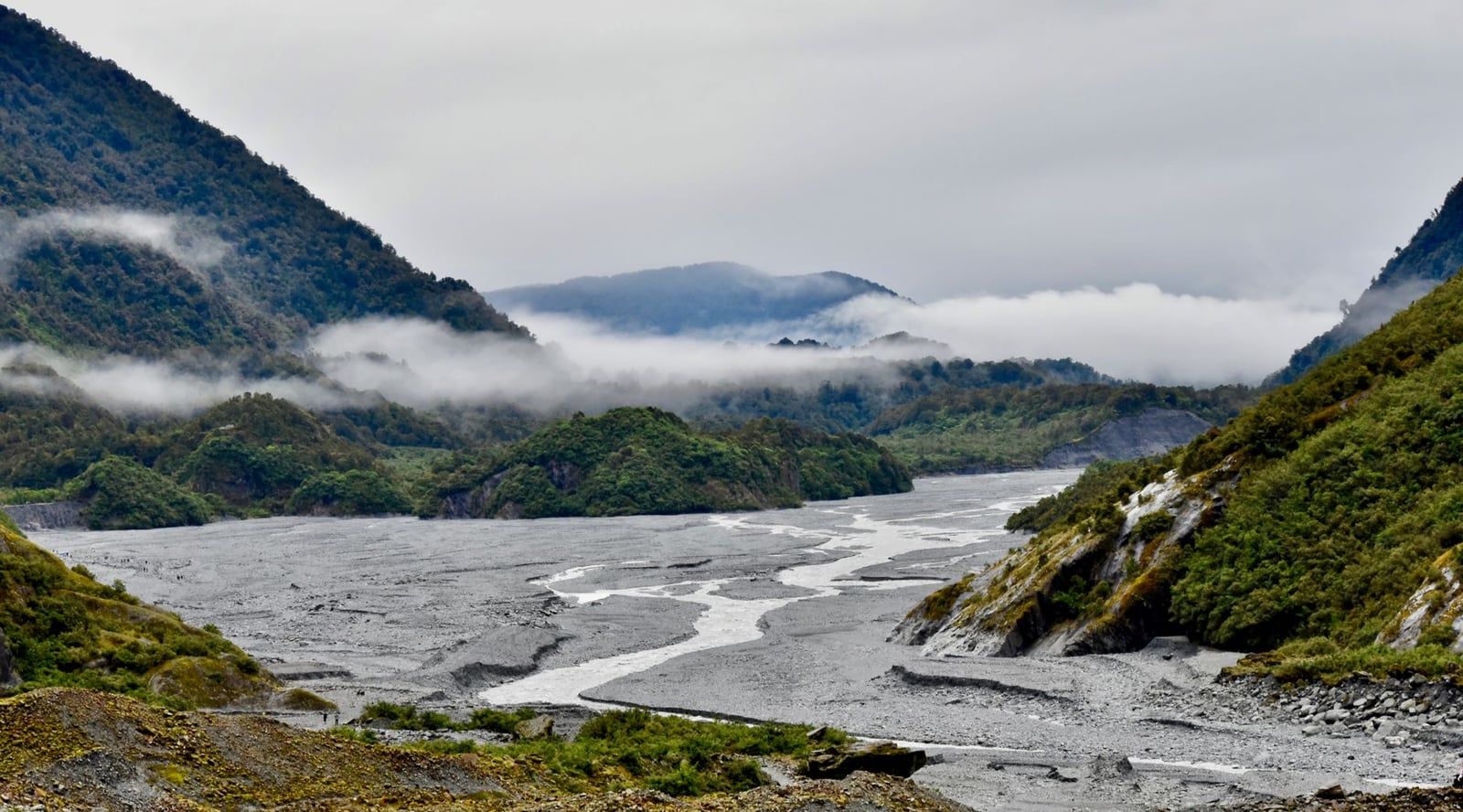
The pattern holds down the whole price list: the flight is the expensive part, so cheaper tickets trade away ice time while keeping the aerial views. If standing on the glacier is the point, the Encounter and the full heli hike are the only two ways in.
Franz Josef Heli Hike: Quick Answers
How much does the Franz Josef Glacier heli hike cost?
NZ$899 per person booked direct with Franz Josef Glacier Guides, with adults and children paying the same rate; that price holds until 30 September 2027. Third-party sites can differ, so check the operator's own page before paying.
How long does the Franz Josef heli hike take, and how much time do you spend on the ice?
Up to four hours from check-in to finish. Within that you get roughly 10–15 minutes of flying each way and up to 2.5 hours on the glacier, usually about two hours of walking with stops for photos and stories.
Is the Franz Josef heli hike hard? What fitness do I need?
It's rated moderate, and no glacier or crampon experience is needed — anyone comfortable walking about two hours will most likely manage. The check-in fitness assessment (step up, pass through a narrow space, climb down unaided) is the real gate, and some people don't clear it on the day.
What are the age, weight and height restrictions?
Minimum age 10, minimum height 137 cm, and a weight range of 35–115 kg; you may be weighed at check-in, and the upper limit includes your gear. Anyone more than 12 weeks pregnant can't take part.
What happens if my heli hike is cancelled for weather?
You get a full refund. The operator needs a four-hour clear-weather window and usually makes the final call just before departure, so build in a buffer: estimated cancellation odds run 40–50% on winter days and 20–30% in summer, and a two- or three-night stay gives you a rebooking chance.
Can you walk on Franz Josef Glacier without a helicopter?
No. The Waiho River has cut foot access up the valley, and independent glacier travel isn't permitted or safe. The free valley walk ends at a distant viewpoint, and the Roberts Point Track (about five hours return) is the closest you can get on foot.
Is the Franz Josef or Fox Glacier heli hike better?
Fox is cheaper (from about NZ$750), gives roughly three hours on the ice and takes children from age 9, and it sits lower, so it often flies when Franz Josef is clouded in. Franz Josef has the bigger, more convenient village. Book one, not both.
Can you do the Franz Josef heli hike from Queenstown?
Yes, as a fly-in package, but expect around six hours door to door and a bill far above the village price. It suits tightly packed itineraries; the self-drive alternative is about five hours each way on SH6.